
According to industry players, over 50 FMPs have exposure to Zee Group companies.
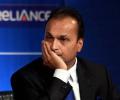
While RCom owes Indian banks close to Rs 45,000 crore, Ambani has lost close to $408 million of personal wealth year-to-date until Tuesday.

The weakness in the rupee and broader markets has led to evaporation in the market cap.

'The 5.7% growth in the April-June period is an aberration because of GST.' 'Business activity in the last 15 days of the quarter was minimal or zero.'

The average fall in 15 most-invested stocks by equity MFs was 5.7 per cent. Chandan Kishore Kant reports


Net investments in active equity mutual fund (MF) schemes rose to Rs 7,300 crore in December after declining to a 21-month low of Rs 2,260 crore in November, shows the latest data from the Association of Mutual Funds in India (Amfi). The rebound in net inflows was driven by a surge in investments and moderation in redemptions. While the inflows into these schemes rose 5 per cent month-on-month (MoM) in December, the redemptions were 14 per cent lower compared to November.

New-generation private sector banks such as ICICI, HDFC, Axis, Kotak etcetera owe their existence to the recommendations of the first Narasimham Committee.

Lenders can now initiate recovery proceedings since the SC has lifted the standstill on asset classification, which protected stressed accounts from slipping into NPAs.
Omkeshwar Singh, Head, Rank MF, a mutual fund investment platform, answers your queries.

Omkeshwar Singh, Head, Rank MF, a mutual fund investment platform, answers your queries.

Polarisation and the increase in index weight of a few a stocks have weighed on performance. The worst performers include Nippon India Large Cap and HDFC Top 100 (2.6 per cent).

Three stockmarket experts give their best picks for the New Year.

Major shareholder Kinnevik, a Swedish investment firm, devalued Quikr by 45%, referring to the exaggerated revenue resulting from fraudulent transactions that rocked the company. Quikr is now valued at about $577 million.

The recent circular follows the 'true-to-label' concept, but large funds in the multi-cap category may be forced to merge in the absence of sufficient small-cap options.

To be fair, one year is too short a period to judge the schemes' performance.

'As our per capita income increases and various demographic segments emerge, the need for various kinds of protection and risk covers will become even more explicit.'

The issue also underscores the growing scrutiny by investors and voting advisory firms of the performance of board members.

Select companies in infra, capital goods, private banks, auto, oil & gas, and mining could be considered by investors.

The fund industry may have embraced machines and robots, but managing money still needs the human touch

'Start-ups that generate a majority of their income in India are likely to opt for an Indian listing.'

Ajit Mishra, Vice President, Research, Religare Broking, answers readers' queries on stocks they own or want to buy.

Sun Pharma was the biggest gainer in the Sensex pack, advancing 1.79 per cent.

Having exposure to international funds and gold is a must for those who have foreign currency-denominated goals.

Ajit Mishra, vice president, Research, Religare Broking, answers your queries.

Stocks such as ICICI Bank, Axis Bank, State Bank of India, Bank of Baroda and HDFC Bank are among the top banking picks of analysts for 2017. A decline in cost of funds and treasury gains are expected to help stabilise their net interest margins

Twenty years after India's insurance sector was opened up, unshackling the control of state-owned companies, as many as 50 private players have set up shop. Along with their foreign partners, private players have brought about a sea change in the product offering, distribution and underwriting processes, and services levels. Yet, India's insurance penetration needle has not moved much.

At the start of 2016, HDFC Bank, Infosys, ICICI Bank, L&T and Axis Bank were the top five picks of fund managers

India's equity markets are on a roller-coaster ride, after delivering spectacular returns for two consecutive years - in 2020 and 2021. The benchmark National Stock Exchange's (NSE's) Nifty50 is down 1.5 per cent in the first nine months of the current calendar year 2022 (CY22) as foreign portfolio investors sold Indian stocks due to rising bond yields in the US and across global markets, including India. The sell-off in the Indian equity markets has, however, not been broad-based and largely limited to sectors facing earnings headwinds from rising interest rates, lower commodity and energy prices, and likely economic recession in advanced economies.

June was a memorable month for the 101-year-old Tamilnad Mercantile Bank (TMB). Last month, the Thoothukudi-based bank witnessed two new landmarks in a history in which the last three decades could easily qualify for a Kollywood blockbuster.
Salil Dhawan reveals the MFs that have not only performed well in the past but have a promising outlook for the future too.

Wondering if mutual fund investments can help you make you enough money for your retirement and child's marriage? Omkeshwar Singh, Head, Rank MF, a mutual fund investment platform, answers your queries.
Ajit Mishra, vice president, Research, Religare Broking, answers your queries.

The majority have stayed away from getting into cash handling.

The companies that have seen sharp erosion of market wealth include YES Bank, Indiabulls Housing Finance, Zee Entertainment, Vodafone Idea, and Bharat Heavy Electricals.

While the overall loan disbursements stood strong at 15 per cent YoY in Q2, pockets such as vehicle finance, loans to NBFCs, and business banking showed some weakness. A continued fall in these numbers may make it tough for AU SFB to defend its valuations under the current circumstances.

Axis Bank and ICICI Bank consumed 37-59 per cent of their operating profit for COVID-19 provisioning, while the figure is 24 per cent in case of Kotak Mahindra Bank and 10-12 per cent for IndusInd Bank and HDFC Bank.

Top losers in the Sensex pack include Bharti Airtel, Infosys, Asian Paints, RIL, Coal India, HDFC Bank, HDFC, TCS, ONGC and M&M, falling up to 3.09 per cent.

Ajit Mishra, vice president, research, Religare Broking, answers your queries.

'We still need a certain number of large public sector banks for financial inclusion and stability purposes.'
